Real Estate Financing in Africa: Is Debt a Growth Tool or a Risk?
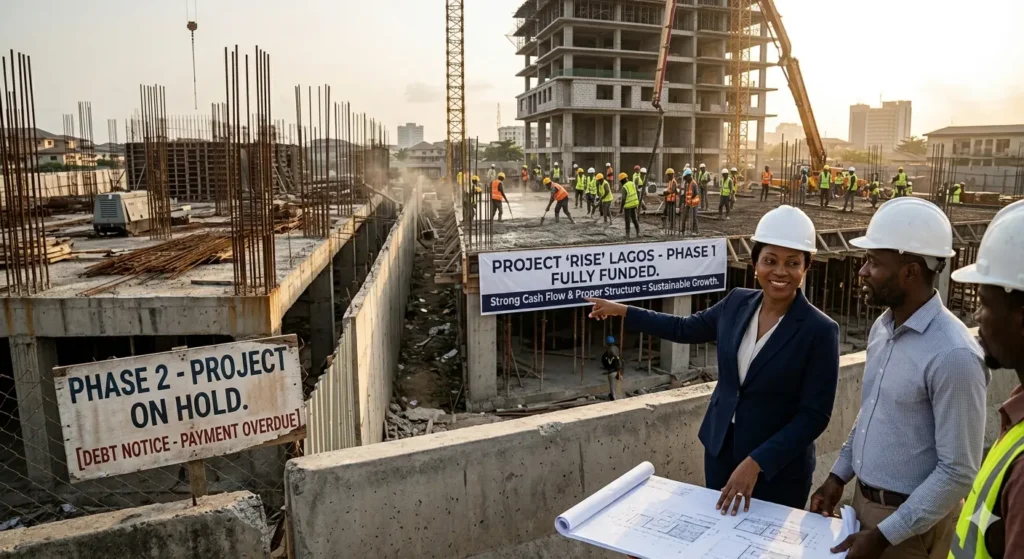
In business, debt is neither good nor bad—it is simply a tool. For developers and investors navigating real estate financing in Africa, the real question is not whether to use debt, but how to use it wisely. Used strategically, debt can accelerate growth and unlock larger opportunities. Used carelessly, it can quietly erode profits and destabilize entire projects. The difference comes down to one critical factor: cash flow discipline. When Debt Makes Sense in Real Estate Financing Debt becomes a powerful growth tool when it is structured with intention and backed by realistic financial planning. In most successful projects, financing works best when: If your cash flow can comfortably cover repayments—even during slower periods—debt can help you scale faster than relying on savings alone. However, if repayment depends on “expected” or uncertain future sales, the risk increases significantly. At that point, it is no longer strategic financing—it is speculation. Common Types of Real Estate Financing in Africa There are several structured financing options available to developers and investors across African markets. Each serves a different purpose depending on the size, timeline, and nature of the project. Bank Loans Traditional financing provided by commercial banks, often used for large-scale developments or property acquisition. Cooperative Loans Community-based lending structures that may offer lower interest rates and more flexible terms. Microfinance Short-term, smaller loans designed to support small businesses and early-stage property ventures. Supplier Credit Deferred payment arrangements with contractors or vendors, allowing projects to move forward without immediate full payment. Asset-Backed Financing Loans secured by physical assets such as land, buildings, equipment, or receivables—common in structured real estate deals. Choosing the right type of financing is not about availability—it is about alignment with your project’s timeline and cash flow structure. The Biggest Financing Mistake to Avoid One of the most common and dangerous mistakes in real estate financing is simple: Never use short-term debt to fund long-term projects If a project will take 18–24 months to generate returns, it cannot safely rely on a 3–6 month repayment structure. This mismatch creates unnecessary pressure, increases default risk, and can force premature decisions that harm the project’s long-term value. In real estate, structure must always match strategy. How to Use Debt Without Putting Your Project at Risk Smart investors approach financing with discipline and foresight. Before taking on debt, consider: These questions help ensure that financing supports growth rather than creating pressure. Action Step: Evaluate Before You Borrow Before committing to any loan, pause and ask one critical question: Can this project comfortably service the debt—even if revenue is slower than expected? If the answer is uncertain, revisit the structure. Refining your financing approach early can prevent costly mistakes later. The Bottom Line for Investors and Developers Debt, when used correctly, is a powerful growth tool. But without discipline, it becomes a silent risk. For anyone navigating real estate financing in Africa, success lies in balancing ambition with structure. Smart financing does more than fund projects—it protects your future while helping you build it.
Three legs of financial wealth: Assets, cashflow and profit
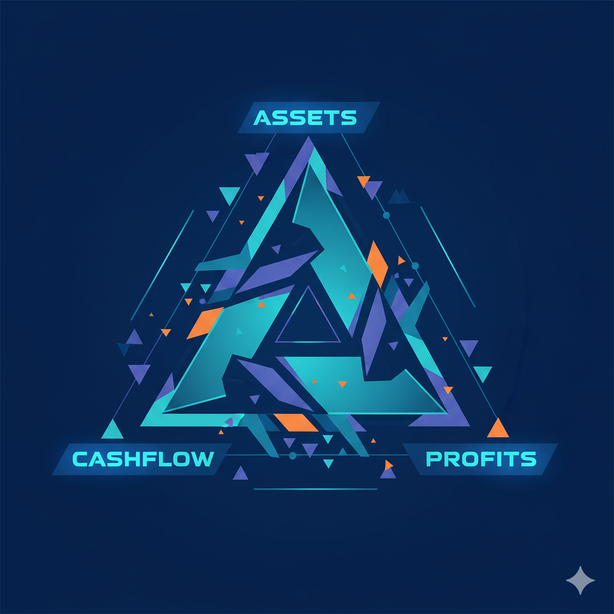
Having a negative in any of the three above erodes financial wealth. A great way to build financial wealth is to always watch out to ensure that all three items are positive.