How to Identify Useful Information Before Making Financial Decisions

Learn how to identify useful information so you can make smarter financial, property, and investment decisions while avoiding information overload.
Innovative Real Estate Funding Models in Africa

The real estate industry is experiencing one of its biggest transformations in decades. Today, innovative real estate funding models are making property investment more accessible than ever before. Opportunities that once required significant capital, exclusive networks, or institutional backing are now opening up to everyday investors, entrepreneurs, and diaspora communities around the world. With the right investment structure, individuals can participate in African real estate with smaller amounts of capital while enjoying greater flexibility and transparency. This is more than a trend—it’s reshaping how real estate investment works. What Are Innovative Real Estate Funding Models? Across Africa and other emerging markets, modern financing solutions are changing how developers raise capital and how investors participate in property opportunities. Rather than replacing traditional financing, these models complement existing funding sources by making investment more inclusive and scalable. Some of the most popular innovative funding models include: Crowdfunding Crowdfunding allows many investors to contribute smaller amounts toward financing a real estate project. By pooling capital from multiple participants, developers can fund projects faster while giving more people access to property investment. Fractional Ownership Fractional ownership enables investors to purchase a percentage of a property instead of buying the entire asset. This lowers the financial barrier to entry and allows investors to diversify across multiple properties. Revenue-Sharing Models Revenue-sharing allows investors to receive returns based on the performance of a project, creating stronger alignment between developers and investors. Convertible Notes Convertible notes provide early-stage funding with the option to convert the investment into equity at a later stage, offering flexibility for both investors and developers. Impact Investing Impact investing combines financial returns with measurable social or environmental outcomes. In Africa, this approach is increasingly supporting affordable housing, sustainable developments, and community-focused real estate projects. Why Innovative Real Estate Funding Models Are Growing Several factors are driving the adoption of these modern investment structures. Lower Barriers to Entry Investors no longer need substantial capital to gain exposure to real estate opportunities. Smaller minimum investments allow more people to participate. Greater Financial Inclusion These funding models create opportunities for first-time investors, young professionals, and members of the African diaspora who want to invest in growing property markets. Improved Transparency Digital investment platforms often provide investors with easier access to project updates, performance reports, and investment information. Portfolio Diversification Instead of investing all their capital in one property, investors can spread their investments across multiple projects and locations, helping to manage risk. Why These Funding Models Matter for Africa Africa’s rapidly growing population, expanding cities, and increasing demand for housing continue to create attractive opportunities for real estate investment. At the same time, traditional financing remains inaccessible for many developers and investors. This is where innovative real estate funding models are making a significant difference by: These models are helping create a more accessible and connected real estate ecosystem across the continent. What This Means for Developers and Investors The future of property investment is no longer just about building developments. It is about creating investment opportunities that allow more people to participate. Developers who embrace modern funding strategies can access new sources of capital, build stronger investor communities, and accelerate project delivery. For investors, these models provide greater flexibility and opportunities to participate in Africa’s growing real estate sector with lower entry requirements. Action Step: Make Your Investment Opportunity More Accessible If you’re developing or funding a real estate project, consider these questions: Designing your investment model around accessibility and trust can position your project for long-term success. The Future of Real Estate Funding The future of real estate investment belongs to models that are more inclusive, transparent, and technology-driven. Those who embrace innovative real estate funding models will not only create value—they will create opportunities for more people to participate in Africa’s growth story. As technology continues to evolve, these funding approaches have the potential to reshape how property is financed, owned, and developed across the continent. The future of real estate is no longer just about ownership. It is about participation. Continue the Series Next Article: Part 8 — Asset & Project-Based Fundraising
Real Estate Financing in Africa: Is Debt a Growth Tool or a Risk?
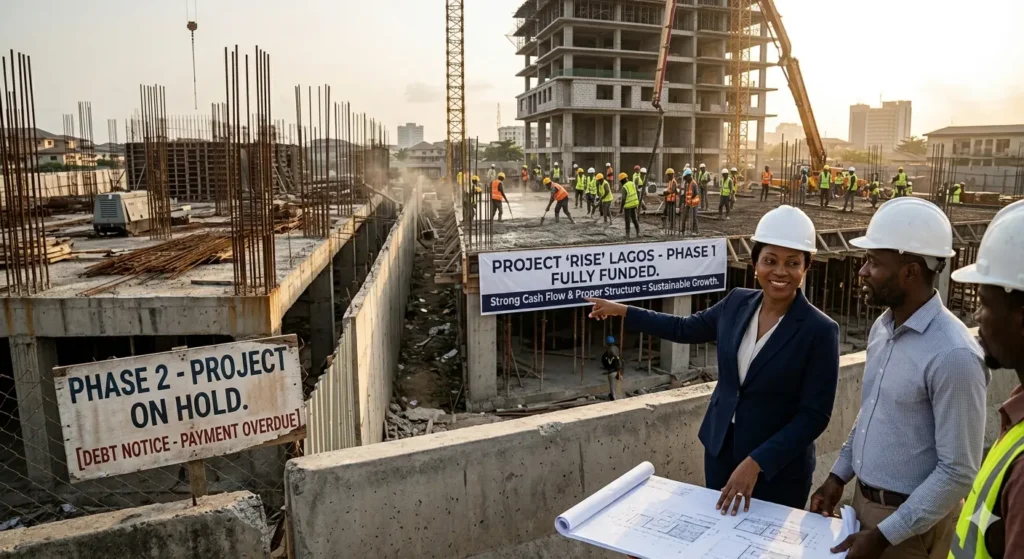
In business, debt is neither good nor bad—it is simply a tool. For developers and investors navigating real estate financing in Africa, the real question is not whether to use debt, but how to use it wisely. Used strategically, debt can accelerate growth and unlock larger opportunities. Used carelessly, it can quietly erode profits and destabilize entire projects. The difference comes down to one critical factor: cash flow discipline. When Debt Makes Sense in Real Estate Financing Debt becomes a powerful growth tool when it is structured with intention and backed by realistic financial planning. In most successful projects, financing works best when: If your cash flow can comfortably cover repayments—even during slower periods—debt can help you scale faster than relying on savings alone. However, if repayment depends on “expected” or uncertain future sales, the risk increases significantly. At that point, it is no longer strategic financing—it is speculation. Common Types of Real Estate Financing in Africa There are several structured financing options available to developers and investors across African markets. Each serves a different purpose depending on the size, timeline, and nature of the project. Bank Loans Traditional financing provided by commercial banks, often used for large-scale developments or property acquisition. Cooperative Loans Community-based lending structures that may offer lower interest rates and more flexible terms. Microfinance Short-term, smaller loans designed to support small businesses and early-stage property ventures. Supplier Credit Deferred payment arrangements with contractors or vendors, allowing projects to move forward without immediate full payment. Asset-Backed Financing Loans secured by physical assets such as land, buildings, equipment, or receivables—common in structured real estate deals. Choosing the right type of financing is not about availability—it is about alignment with your project’s timeline and cash flow structure. The Biggest Financing Mistake to Avoid One of the most common and dangerous mistakes in real estate financing is simple: Never use short-term debt to fund long-term projects If a project will take 18–24 months to generate returns, it cannot safely rely on a 3–6 month repayment structure. This mismatch creates unnecessary pressure, increases default risk, and can force premature decisions that harm the project’s long-term value. In real estate, structure must always match strategy. How to Use Debt Without Putting Your Project at Risk Smart investors approach financing with discipline and foresight. Before taking on debt, consider: These questions help ensure that financing supports growth rather than creating pressure. Action Step: Evaluate Before You Borrow Before committing to any loan, pause and ask one critical question: Can this project comfortably service the debt—even if revenue is slower than expected? If the answer is uncertain, revisit the structure. Refining your financing approach early can prevent costly mistakes later. The Bottom Line for Investors and Developers Debt, when used correctly, is a powerful growth tool. But without discipline, it becomes a silent risk. For anyone navigating real estate financing in Africa, success lies in balancing ambition with structure. Smart financing does more than fund projects—it protects your future while helping you build it.
Real Estate Grants in Africa
Not all funding comes with repayment schedules or interest rates. In many cases, the most strategic capital available to developers and entrepreneurs comes in the form of real estate grants in Africa, sponsorships, and support funds. These funding sources are designed to fuel impact, innovation, and sustainable development—especially in emerging markets where housing, infrastructure, and community growth are critical. For global investors, developers, and social entrepreneurs, this creates a powerful opportunity: scale meaningful projects without the burden of debt. Why Grants and Support Funds Matter in Real Estate Unlike traditional financing, grants and sponsorships are not just about returns—they are about outcomes. They are typically awarded to projects that: In Africa’s rapidly growing cities, these funding sources are becoming increasingly important in supporting affordable housing, smart urban development, and sustainable real estate projects. What Real Estate Grants in Africa Typically Support Grant providers and sponsors often align around key impact areas. If your project fits into one or more of these, your chances of securing funding increase significantly. Social and Economic Impact Projects that improve living conditions, increase access to housing, or uplift underserved communities. Innovation and Problem-Solving New approaches to construction, financing, or urban development—especially scalable solutions. Job and Skills Creation Developments that generate employment or build local capacity. Community Development and Inclusion Projects that prioritize accessibility, inclusion, and long-term community value. Whether your focus is housing, infrastructure, or mixed-use developments, there are funding opportunities actively seeking solutions like yours. Common Sources of Real Estate Grants in Africa Funding opportunities come from a wide range of institutions, each with different priorities and application processes. Government Programs Many African governments and housing agencies offer grants to support urban development and affordable housing initiatives. Foundations and Nonprofit Organizations Global and regional foundations often fund projects focused on housing, sustainability, and community impact. Development Institutions Organizations like the African Development Bank and the World Bank provide funding and support for large-scale development and housing projects. Corporate Social Responsibility (CSR) Initiatives Private companies invest in real estate and community projects as part of their social impact programs. Pitch Competitions and Challenge Funds Many global platforms offer funding through competitions focused on innovation, sustainability, and urban development. What Funders Look for in Grant Applications Securing funding is not just about having a great idea—it’s about presenting a structured, credible plan. Successful applicants typically demonstrate: In short, funders invest in clarity, structure, and execution—not just vision. How to Position Your Project for Grant Funding Before applying for any grant or sponsorship, take time to refine your core message. Start by answering three key questions: This clarity will strengthen not only your grant applications but also your investor conversations and project strategy. Action Step: Build Your Funding Foundation Take a few minutes to write one clear, compelling paragraph that explains: This single paragraph can become the foundation for your: Start with clarity. Build with purpose. Grow with impact. Continue the Series Next Article: Part 6 — Loans & Structured Finance
Real Estate Inflation Hedge: Why Property Wins in Africa

Real estate inflation hedge strategies are increasingly important as rising prices reduce the purchasing power of cash. When inflation pushes up the cost of food, transport, and daily living, property often responds differently. Instead of losing value, real estate has historically shown the ability to protect wealth and even grow during inflationary periods — especially in high-demand markets like Africa. 1. Property Values Tend to Rise With Inflation Real estate values often increase alongside inflation rather than decline. As living costs rise, so do the underlying expenses tied to property development, including: These factors push property values upward over time, helping real estate maintain — and often exceed — inflation-adjusted value. For investors, this means property can preserve purchasing power while offering long-term appreciation. 2. Rental Income Adjusts Upward Over Time One of the strongest advantages of real estate is recurring rental income. As inflation increases, rents typically rise as well, allowing property owners to: Unlike fixed-income investments, rental income is flexible and can grow in line with inflation, protecting real returns. 3. Fixed-Rate Mortgages Become Easier to Manage Financing property with a fixed-rate mortgage can work in an investor’s favor during inflation. While inflation rises, mortgage payments remain unchanged. Over time, this means: Inflation effectively reduces the burden of fixed debt while strengthening the asset tied to it. 4. Real Estate Is a Tangible, Durable Asset Property is a physical asset — land, buildings, and structures that serve real needs. Unlike volatile paper or digital assets, real estate tends to be more resilient during economic uncertainty. In inflationary environments, investors often shift toward tangible assets to preserve wealth, making property a preferred store of value. 5. Housing Demand Rarely Disappears People will always need housing. Whether residential homes, rental apartments, or serviced land, real estate fulfills a basic human necessity. Even during inflation: This sustained demand helps real estate outperform many other asset classes during inflationary cycles. Real Estate vs Inflation: A Simple Illustration Imagine purchasing a property for R1 million. After five years, that property could be worth R1.6 million or more. Meanwhile: While holding cash would reduce purchasing power, property ownership supports wealth preservation and growth. For long-term investors, a real estate inflation hedge works because property values and rental income tend to rise alongside living costs. This combination allows investors to preserve purchasing power while benefiting from steady demand for housing. Why This Matters for African Real Estate Investors Many African property markets benefit from: These factors strengthen the role of real estate as a hedge against inflation, particularly for long-term investors seeking stability and income. Final Thoughts: Protecting Wealth in an Inflationary World Inflation is unavoidable, but poor preparation is not. Real estate offers a powerful combination of asset appreciation, income growth, and long-term stability. Whether you are purchasing your first property or expanding an investment portfolio, property remains one of the most effective ways to protect and grow wealth during inflationary periods. Key Takeaway Real estate doesn’t just keep up with inflation — it can transform rising prices into long-term wealth. Looking to protect your wealth through African real estate?Explore insights, opportunities, and investment strategies at GrowMyHome Africa — your gateway to sustainable property growth in emerging markets.